Your Guide to All Things Solar
We know going solar comes with questions.
So we’ve rounded up the ones we hear most, to help you plan your solar journey with confidence.
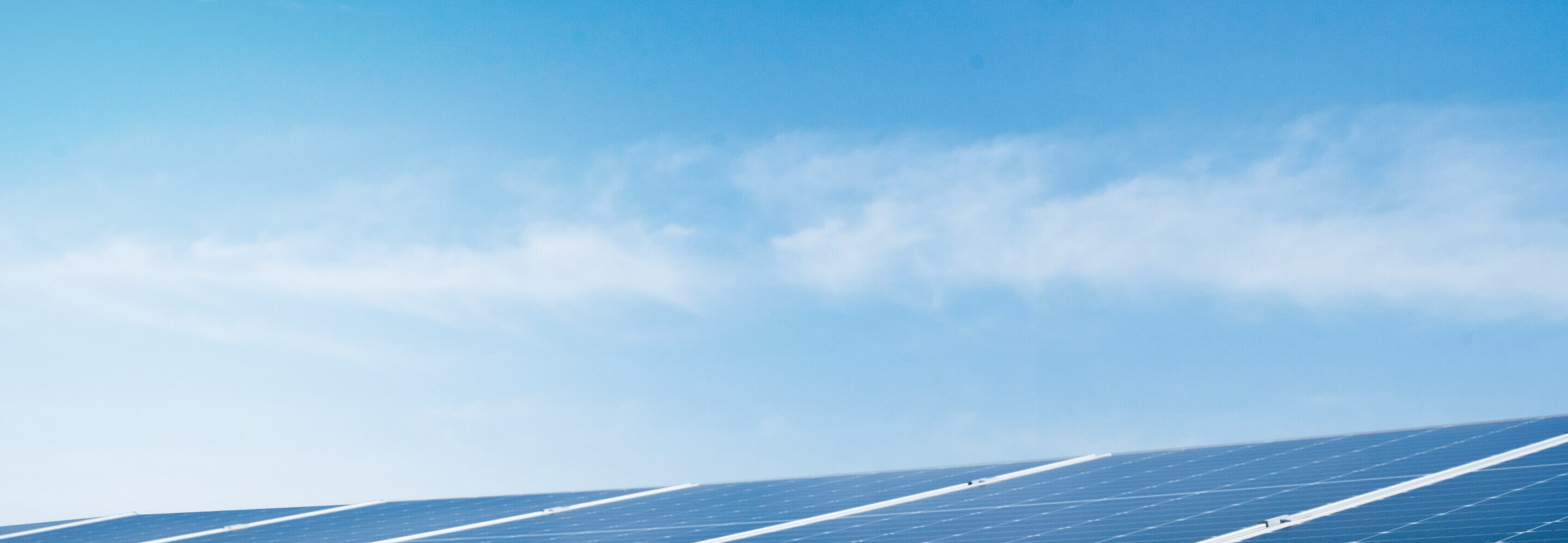
A solar power plant is a system that produces clean, renewable electrical energy by converting incident solar energy from our sun into electricity through the photovoltaic effect.
Solar photovoltaic (PV) modules, installed on a roof, a carport, or a ground-mount structure, harvest photons from the sun and create direct current (DC) electrical energy. This DC electricity is then converted to alternating current (AC) electricity via the solar inverter, which is perfectly synchronised with the frequency and voltage of the grid so that the solar energy can be immediately used by electrical loads.
A solar PV system cannot store energy independently; it produces electrical power that must be immediately consumed, either by on-site loads or by exporting to the grid to be consumed elsewhere, or stored in a battery energy storage system (BESS). Batteries allow surplus solar energy to be stored for on-site consumption at a later time. A BESS has a number of other advantages as well, including alleviation of business interruptions from grid outages or, in South Africa, load shedding.
It’s green: Solar energy is a renewable and sustainable energy source that produces no operational greenhouse gas emissions. Consumption of clean, renewable power on-site also avoids consumption of grid power, which, in many countries, unfortunately, still relies heavily on fossil fuels, such as coal. It’s cheap: Since the fuel (sunlight) is a free resource, the only significant costs are capital costs. Thus, in most areas of the world with at least a moderate solar resource, solar energy is an affordable energy source and typically cheaper than grid power. It reduces air-conditioning loads: Rooftop solar drastically reduces the solar heat gain through the roof of the building on which the solar modules are installed, resulting in energy efficiency savings. It’s low maintenance: While there are no moving parts, solar PV systems are still complex and require both preventative and corrective maintenance. However, when partnering with Candi, all risks are taken out of your hands from the start. Candi ensures the PV system is looked after to maximise operational yields, prolong system lifetime, and minimise our customers’ responsibilities.
Solar alone reduces costs but doesn’t prevent downtime. To ensure reliable power during grid outages, Candi integrates backup solutions like batteries or diesel generators. These add cost, but the value outweighs the losses caused by interruptions.
An “on-grid” solar power system can go by many names - utility-interactive solar power system, a grid-following solar power system, a grid-connected solar power system. Each of these describes a solar PV system that can be installed in parallel with a grid supply and interact in a seamless manner.
An on-grid solar power system works in conjunction with the main grid to supplement the grid’s power with clean solar energy. When the grid goes down, the on-grid solar power system also shuts down. An off-grid system is capable of operating independently of the grid and utilises special “grid-forming” inverters that create and maintain the voltage and frequency of the power supply. Candi also offers hybrid microgrid solutions that switch seamlessly between on-grid and off-grid modes, ensuring reliable power in all conditions. This provides a reliable and clean power supply at all times, regardless of grid availability.
Rooftop solar functions as described in Question 2 above, with the added detail that the solar array is installed on top of a building’s roof. There is a wide variety of module mounting system options available to cater to all roof surfaces used in the market.
Solar energy is not only the future, it is the present. It produces affordable, clean power, and when partnering with Candi, can be low-maintenance with zero upfront costs. This results in immediate savings for your business. When paired with batteries (BESS), Candi ensures no more interruptions to your business’s workflow caused by events such as load shedding in South Africa. In many cases, Candi can help you save additional money through peak shaving and energy arbitrage.
Solar modules are installed by hand by one of our many trusted engineering, procurement, and construction (EPC) contractor partners. Candi vets each of our partners to ensure they are among the best in the market. Candi reviews and approves work completed throughout all stages of the project from design to commissioning, securing the highest quality output.
The rule of thumb is about 8 - 10 square metres of rooftop space for a kWp of power to be produced. This is an estimation that is often used, but it is not sacrosanct as module capacities change constantly, and the nature of the space has an impact on system efficiency (e.g. lots of shadowing/obstacles reduce the true usable area). It is advisable to have a site survey done to determine the solar power system size that can be supported by the available roof area.
Net metering involves adjusting exported electricity to imported electricity. Offsetting takes place within the billing period at the applicable grid tariff. Your business either pays for the excess units consumed beyond the solar generation or gets credit for surplus units the plant has generated at the same tariff as the applicable grid tariff. In the case of gross metering, your utility compensates your business by paying a feed-in tariff for the electricity generated by the solar power system within the billing period. Typically, no power from the system is consumed on-site with this approach, and the grid takes everything.
Yes. One key advantage of solar PV is that it is extremely modular. Installation can be upsized based on electricity demand, provided that space is not a constraint.
While it is true that solar technology will continue to be developed in the years to come, the current systems available have been designed with a future-focused approach and already serve a mature market. Current systems deliver proven savings, and costs aren’t expected to drop significantly in the near term. Waiting often means losing years of potential savings. In addition, incentives like accelerated depreciation in India or Section 12B tax benefits in South Africa may not last forever. Switching now lets your business lock in both cost savings and available tax benefits immediately.
Candi earns a fee for offering a risk-free solar solution that ensures you receive a fully optimised final solution that works smoothly over the long term. Importantly, Candi only earns this fee if the solar power system performs, leaving you with total peace of mind that the team is committed to quality installation, care, and maintenance. If you wanted to become solar experts and take the full operational/technical risk of solar going wrong, whilst managing the entire implementation and maintenance of the system, you would not need to pay Candi a fee. In reality, that is not achievable given the time and expertise required to do this effectively, whilst still focusing on your core business. See also questions 2, 3and 4.
Banks lend money and charge interest, often securing against your whole business. Candi, however, provides capital + full operational responsibility, with security only against the solar asset. If you finance through a bank, you still pay monthly installments even if the system underperforms. With Candi, if the system doesn’t perform, you don’t pay, ensuring customer and provider interests are 100% aligned. Plus, Candi’s model doesn’t affect your other credit lines and has a simpler approval process.
You can buy and manage the system yourself, but this means higher risk and responsibility. If the system performs poorly, you still bear the full cost. With Candi, no performance = no payment. Candi handles installation, maintenance, and optimisation, ensuring the system runs at its best for years.
A tariff may look the same, but check contract duration; a 15-year vs. 25-year term makes a big difference in savings. Also consider the tax benefits that Candi’s products may offer. Candi combines an international footprint (Swiss roots, global investors) with a local presence (teams in India & South Africa). Their advanced monitoring tech ensures optimal performance, while their track record shows quality and long-term reliability. Just buying a solar system without any energy provider looking after your system’s performance is not the way to go solar!
Candi analyses your metering data, site situation, and consumption profile to offer a quote that is optimised for your profile. Candi sizes the system so that it performs as efficiently as possible as Candi’s interests are aligned with the customer’s interests. Companies that are simply selling hardware are incentivised to maximise the size of the system to maximise the sales price.
Candi only finances businesses, not residential or other private operations. Candi also does not finance businesses involved in activities such as the production of weapons, gambling, or coal mining etc. Candi’s purpose is to power a more sustainable planet; thus, in principle, we would like everyone to go solar. Nonetheless, we have these limitations in place to ensure seamless operations and to avoid unnecessary risk.
There is no right answer to this. It is really a matter of preference. Long tenor contracts typically generate immediate savings, while short tenor contracts provide greater savings over the lifespan of the solar power system (as you reach the benefits of free power more quickly). Which of these is more important is subjective. Candi is committed to working with you to find a suited solution to your business’s needs.
It takes anywhere between 1 and 4 months to set up the solar power system after completing all formalities, depending predominantly on the size of the system and the complexity of the site.