Commercial and industrial solar started with a simple proposition: generate your own electricity, reduce your power costs and rely less on the grid.
That proposition still holds. But the market is changing.
Businesses are looking beyond the rooftop. Larger energy users are exploring open access. Financing is becoming a bigger part of the decision. Battery storage is entering the conversation. And as renewable capacity grows, grid infrastructure is becoming an increasingly important consideration.
We have seen this evolution at Candi Solar.
Since 2018, we have grown from a predominantly rooftop-focused business into a broader C&I energy platform across India and South Africa. Today, we have more than 250 MW of contracted capacity, on road to more than 400 MW by mid-2027 and around 1.25 GW by the end of 2028.
The opportunity is growing. But so is the complexity.
The Roof is No Longer the Limit
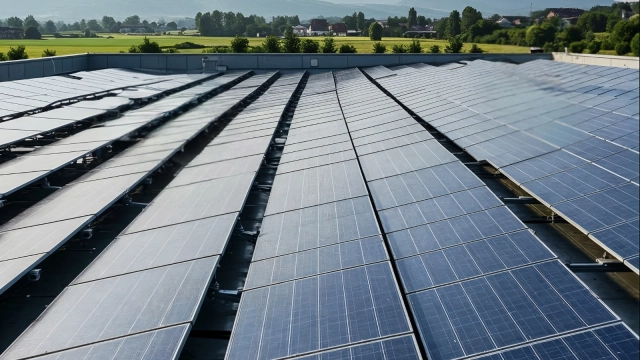
Rooftop solar remains one of the most practical ways for a business to reduce its electricity costs.
But every roof has a limit.
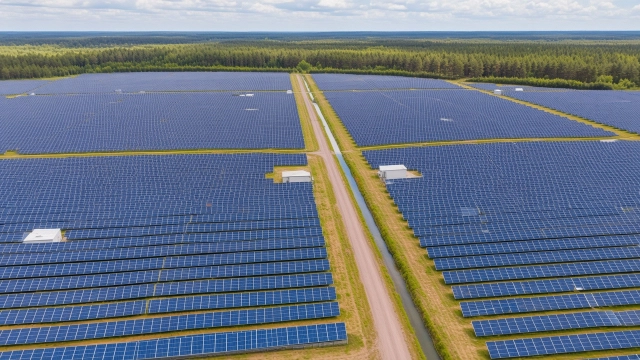
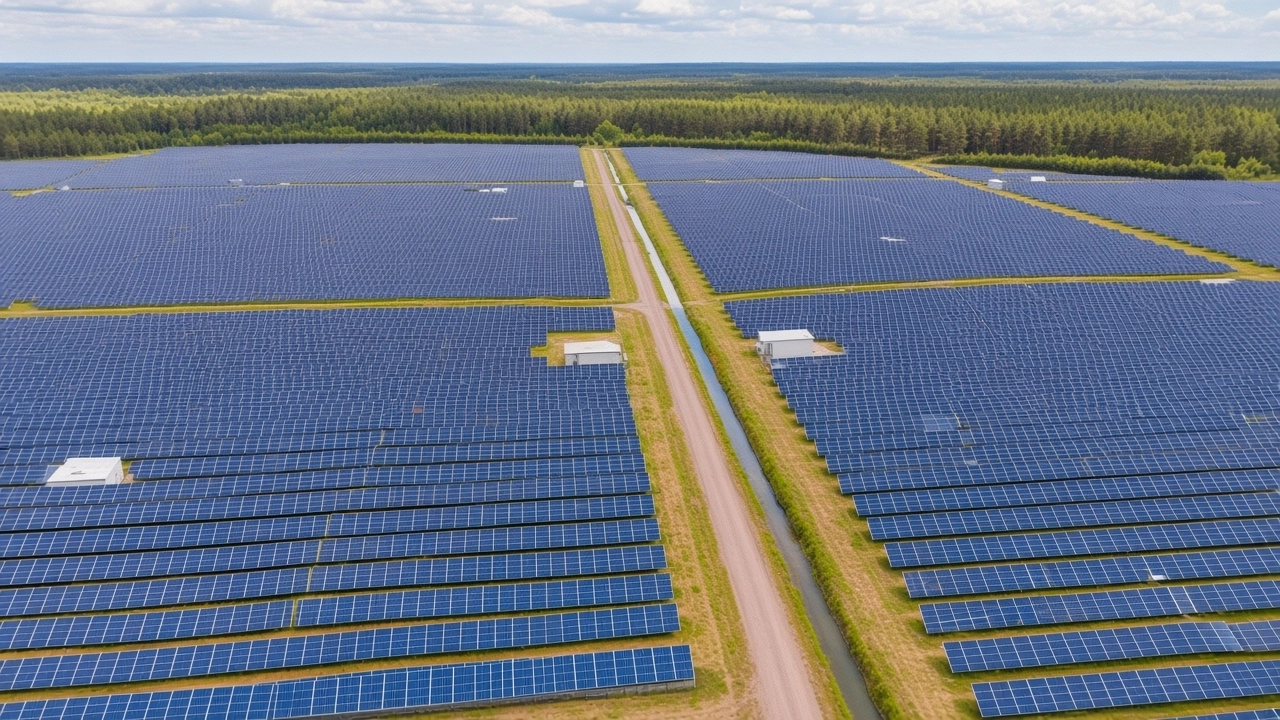
For businesses with larger electricity requirements, open access can provide access to significantly more solar capacity. A typical open-access project can be 10–15 MW. Reaching similar capacity through rooftop installations could require around 20 separate projects.
We entered the open-access market around three years ago. After an initial period of building our understanding of the market, we significantly increased our focus.
Today, 85 MWp of our Indian portfolio comes from open access, and we expect this segment to continue accelerating.
Rooftop remains important. But businesses now have more ways to access solar.
Solar is also a Financing Decision
Once you move beyond the technology, the questions become financial.
How much capital should be invested? Who should own the asset? What happens to cash flow? Who takes the performance risk?
These questions are particularly relevant for SMEs.
Around 90% of India's energy consumption comes from the SME segment, yet traditional financing has often been geared towards larger, investment-grade businesses.
We have focused on SMEs from the beginning.
Our approach is to assess the underlying business and project risk. This allows us to structure financing solutions for businesses that may not fit traditional lending models.
For us, innovation is not just about technology. It is also about financial products, credit assessment and asset management.
As Solar Scales, the Grid Matters More
India's renewable energy growth is also creating a new constraint.
In some locations, grid and transmission infrastructure have not expanded at the same pace as solar generation.
This makes storage increasingly relevant.
Solar generates most of its electricity during the day. Businesses and the grid need electricity throughout the day.
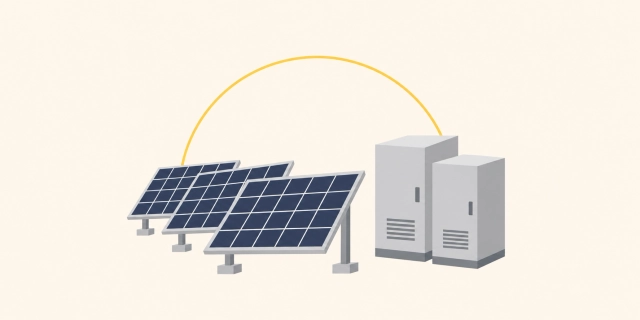
Battery Energy Storage Solution [BESS] can help bridge that gap.
We have been deploying battery storage in South Africa for six to seven years. India's market is still relatively young, but we believe it is now reaching a point where BESS can become a significant part of the C&I energy mix.
Building at Scale Means Managing Risk
Larger projects also bring more complexity.
Open-access projects can take longer to develop because they involve land, grid connectivity, approvals and procurement.
Regulatory changes add another consideration.
We began preparing for the ALMM transition in the third quarter of 2025. Where there was a risk of missing the relevant timelines, we planned around ALMM-compliant modules rather than relying on exemptions.
For us, the lesson is straightforward: regulation will evolve, but businesses need enough visibility to plan ahead.
The same principle applies to the assets themselves.
We are evaluating technologies such as Zinc Aluminium Magnesium (ZAM) mounting structures, particularly for coastal projects where corrosion resistance can be important.
A solar project is a long-term asset. The details matter.
Performance is Part of the Financial Return
Building a solar plant is only the beginning.
Its value ultimately depends on how it performs over its operating life.
That is why we have invested in asset management and performance monitoring. Our customised data systems capture performance data every five minutes, giving our Asset Intelligence team greater visibility into system performance.
We have seen the impact this can have.
When we took over a 1 MW rooftop system in Maharashtra that had been operating around 5% below expectations, generation increased by 16% in the first year.
Performance is not simply a technical metric.
It directly affects the economics of the asset.
From Solar to a Broader Energy Platform
Our journey reflects where we see the market heading.
We started with rooftop solar. We expanded into open access. Now we are expanding into BESS.
We also see opportunities in energy efficiency and EV charging. We have already helped customers install EV charging infrastructure for their employees.
The common thread is the customer's energy consumption.
Once we understand how a business generates, consumes and pays for electricity, we can look beyond solar alone.
Can energy be stored?
Can consumption be shifted?
Can efficiency improve?
Can dependence on the grid be reduced?
These questions are increasingly connected.
What this Means for Businesses
The C&I solar decision is becoming more sophisticated.
It is no longer simply about whether solar can reduce your electricity bill.
It is about how much energy you need, where it should come from, how it should be financed, who carries the risk and what role storage can play.
That is the market we are building for.
Our immediate focus remains India and South Africa, where we expect to grow beyond 1.2–1.3 GW by the end of 2028.
The longer-term opportunity could extend further across Asia and Africa.
But the objective remains the same:
Help businesses make better decisions about one of their largest operating costs - energy.