Grid Banking or Battery Storage? What to Do When You Have Excess Solar
Solar works when the sun is shining. Your factory, however, keeps its own hours. Production might begin at 8:30 in the morning, run steadily through the afternoon, pause for a shift change and pick up again later in the day. Electricity consumption, in other words, rarely follows the sun, and that mismatch is where one of the more talked-about ideas in commercial solar comes in: energy banking, or grid banking.
The premise sounds simple enough. Generate more solar power than you need, send the surplus to the grid, and draw on the resulting credit later when you need electricity from the grid. But there is an important detail that tends to get lost in the pitch. The grid is not a giant battery sitting somewhere, quietly waiting to hand your electricity back.
A bank where everyone walks in at once
A more useful way to think about the grid is as a bank, albeit one where every customer tends to arrive at the same time. When you deposit ₹100, your bank does not tuck those exact notes into an envelope with your name on it. The money goes into a wider pool, and the bank manages deposits and withdrawals across all of its customers.
The grid works in a broadly similar way. When a solar plant exports electricity, that power flows into the grid and is used by whoever is drawing electricity at that moment. The difficulty is that your plant is rarely the only one exporting. During the peak hours of the day, when your panels are producing the most, thousands of other solar plants are doing exactly the same thing, all pushing their surplus into a grid that has no way of storing it. That energy has to go somewhere, so it is distributed to nearby consumers, often surrounding villages, at the time it is generated.
Night tells a different story. Once the sun sets, nobody is sending excess solar into the grid, and the grid has to fall back on its own sources of power to keep those same villages supplied. The surplus of the afternoon cannot be saved for the evening, which is precisely why the grid cannot rely on solar exports, and why banking rules matter so much.
Should your business size its solar plant around grid banking?
We believe the cost-benefit should be the primary reason to switch to solar, with banking as an ancillary cookie on top. The first question a business should ask, then, is not how much it can export, but how much of the solar power it can actually use.
It sounds obvious, yet it can materially change the size of a project. Imagine a factory whose production starts at 8:30 am. Based on its annual electricity consumption, a 2 MW solar plant might look like the sensible choice. But if the factory consumes very little electricity in the early morning, a significant share of that generation would end up as surplus.
In one project Candi evaluated, the initial assessment pointed to roughly 2 MW of solar. Once the customer's 15-minute consumption data was analysed, the more appropriate capacity turned out to be closer to 900 kW. The difference came down entirely to timing. The larger plant would have produced plenty of electricity that the factory simply could not use when it was generated, whereas a 900 kW system allowed a far larger share of generation to be consumed directly. That matters, because directly replacing expensive grid electricity is the fundamental source of solar savings.
When solar generates more than you need
This is where grid banking earns its place. Depending on the applicable state regulations, surplus electricity can be exported to the grid and credited for later adjustment. Those rules, however, are far from universal. Banking charges, settlement periods, withdrawal conditions, permitted quantities and the treatment of unused credits can all differ from state to state, and they can change over time.
The economics of a solar project, therefore, should not hinge on a banking rule remaining untouched for the next 20 years. A project should work because the business is using solar to reduce the amount of electricity it buys from the grid. Banking is the extra benefit; it should never be the foundation.
And what about a battery?
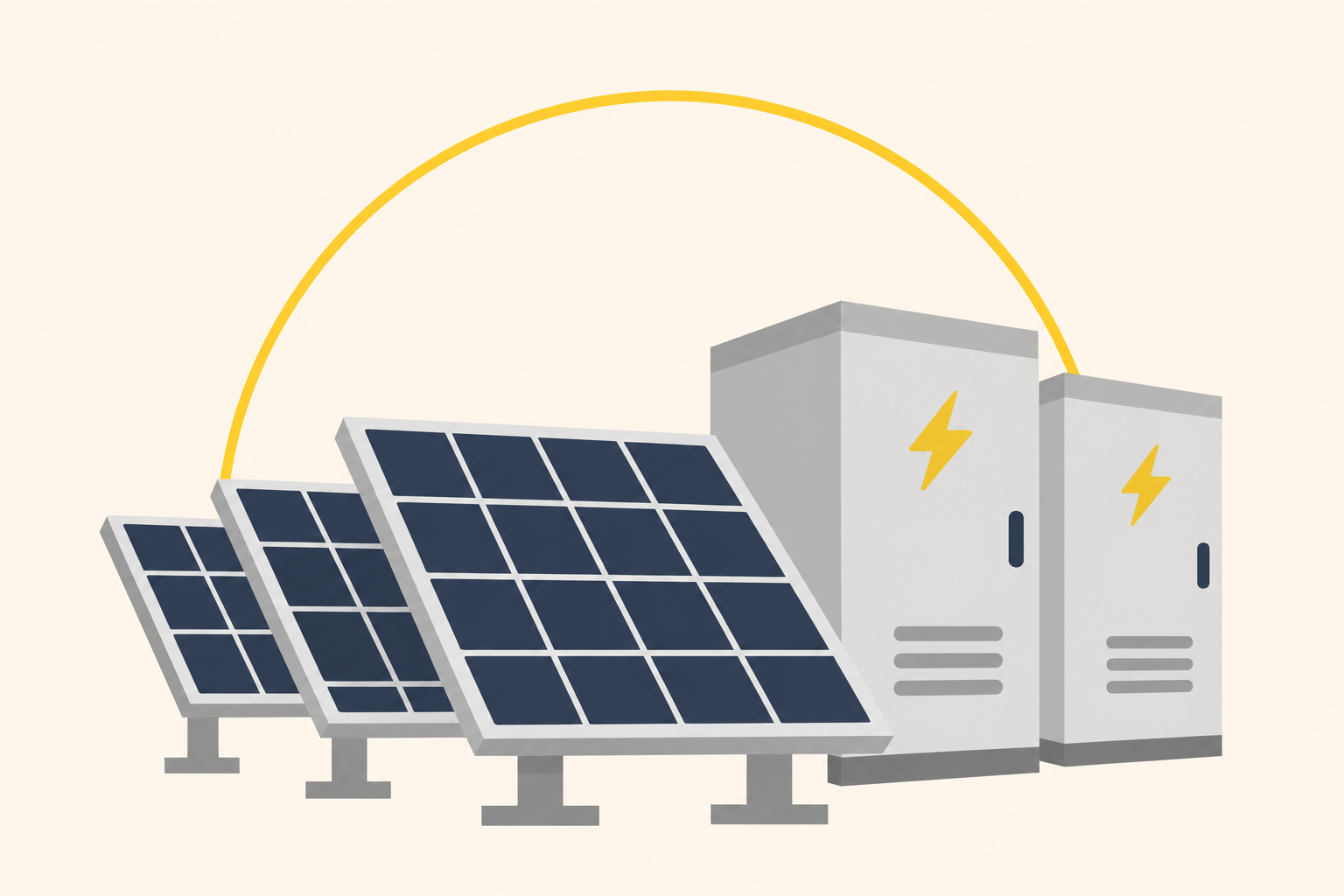
This is where things get more interesting. If a business regularly generates more solar power than it can consume, a Battery Energy Storage System, or BESS, can store that energy and make it available later. Rather than the surplus flowing straight out to the grid, the system can send solar to the factory first, route the excess into the battery, and release it back to the factory when it is needed. Whatever is still left over can then be sent to the grid to earn credits.
That arrangement can be particularly valuable for businesses with significant electricity demand outside solar hours, or during periods when grid electricity is more expensive. Crucially, a battery does not depend on the grid accepting your surplus and returning a credit later; it physically stores the energy on site. Batteries do, of course, cost money, so a careful cost-benefit analysis of every option on the table is always worthwhile.
The simplest way to think about it
A good solar project is not about producing the most electricity possible. It is about producing the right amount of electricity at the right economics. Candi looks at a customer's actual consumption pattern, solar generation profile, tariffs and the applicable regulatory framework to work out what that looks like in practice.
If the business can use its solar directly, that is where the core savings lie. If there is recurring mismatch between when solar is generated and when electricity is needed, BESS may be worth considering. And if there is still surplus, banking can help. The grid can help balance the equation, but it is not your battery, and it is not quite your traditional bank either.
The best place to start remains the same: look at the electricity bill.
The challenge



Lower electricity costs
In 2025 alone, the system delivered:
R622,159
in electricity savings

1.4 GWH
of clean energy generated

1,800 TONNES
of CO₂ emissions avoided
The result is not only a more resilient operation, but a more cost-efficient and sustainable one too
One Successful Phase Deserves Another
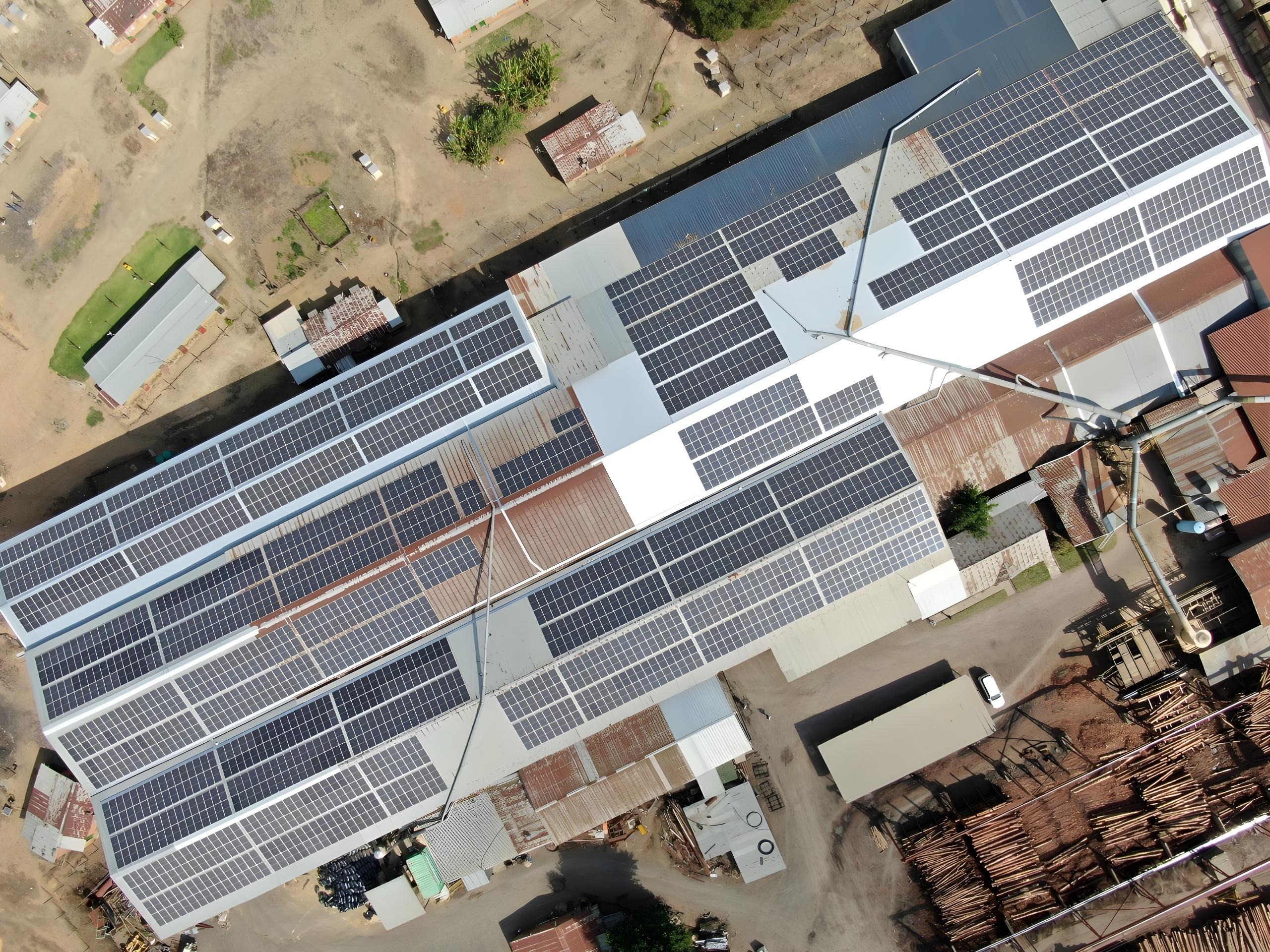
The performance of the first phase gave Bracken Timbers the confidence to go further.
Following its success, the company approved an additional 540 kWp expansion. Once complete, the expanded system is expected to increase annual electricity savings to approximately R1.1 million, while covering even more of the sawmill's daytime energy needs.
Every time the power went out, production slowed. Delivery schedules became harder to maintain, customer commitments came under pressure, and the disruption extended far beyond the factory floor - to suppliers, customers and the company's 1,500-strong workforce.
The team explored generating electricity using its own wood waste, including sawdust and bark. While it was technically possible, building, operating and maintaining an energy plant would require specialist expertise outside its core business.
Bracken Timbers knew what it needed: a reliable energy solution and an experienced partner to make it happen.
The solution
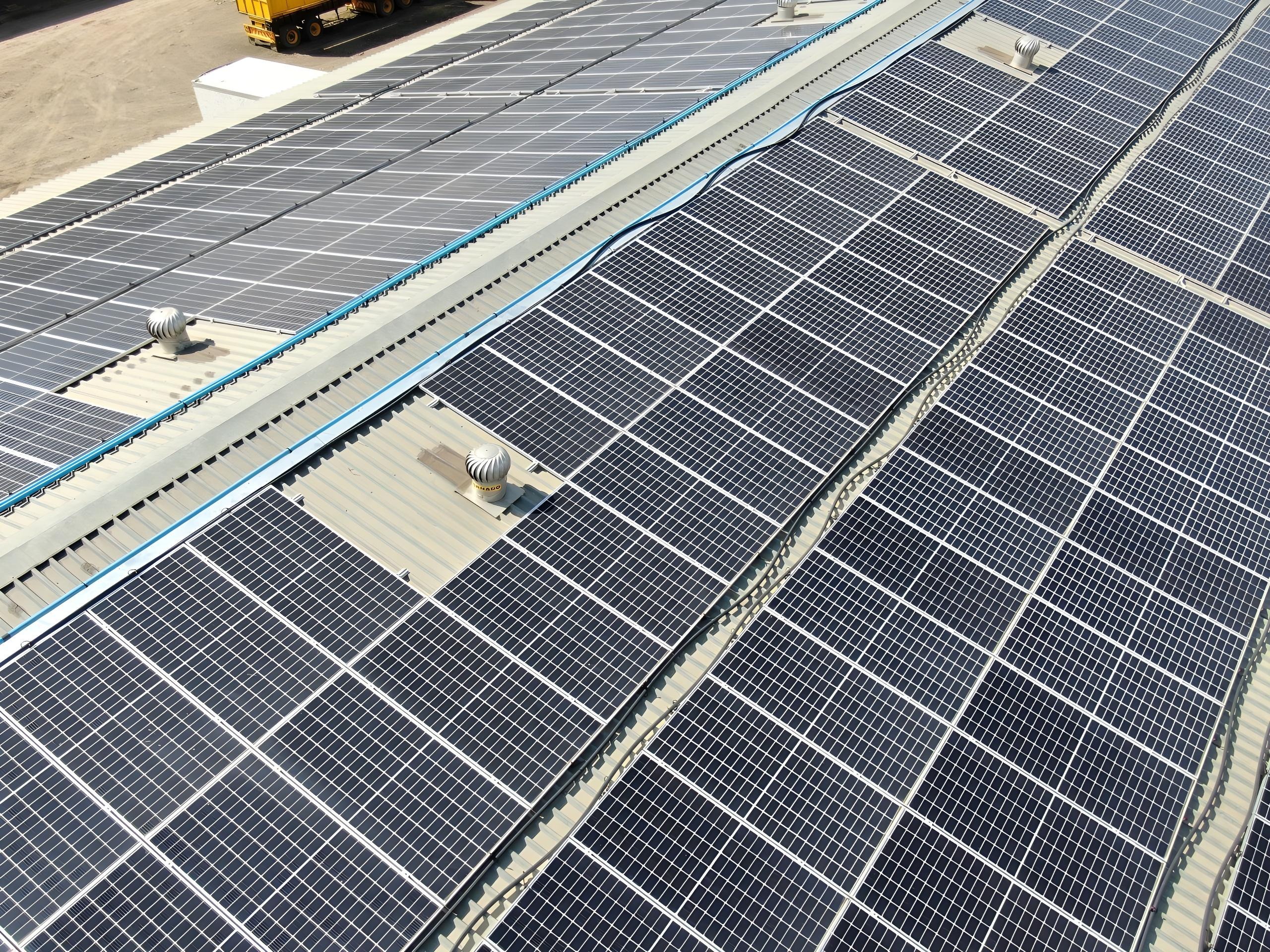
Candi Solar designed and financed a 1.5 MWp solar installation through its Performance-Linked Instalment Sale (PLIS) model.
In simple terms, Bracken Timbers did not need to make a heavy upfront investment or take on the operational risk of managing a solar plant.
Instead, the business pays for the energy the system generates, while Candi takes responsibility for its performance, maintenance and long-term optimisation.
That means the Bracken Timbers team can remain focused on what it does best: producing quality structural timber - while its solar system gets on with producing reliable, more affordable energy.
The impact
Production Keeps Moving
The solar system was integrated with Bracken Timbers' existing backup generators, helping the sawmill continue operating for full nine-hour shifts during load shedding.
So, while grid interruptions continue to bring production to a halt for many manufacturers, Bracken Timbers can keep its mill running, stay on schedule and continue fulfilling customer orders.
Most importantly, this increased energy stability helps protect consistent employment for more than 1,500 people.
“
The partnership has delivered exactly what was promised. As the solar system operates over time, the financial and operational benefits will only continue to grow.
George Johnson,
Director, Sawmill & Charcoal,
Bracken Timbers





Thinking about solar for your business?
Get a free, tailored assessment of what solar could save you — with zero upfront cost and performance risk carried by us.
Book a free consultation