Performance Protected: Turning Solar Back into a Reliable Investment

In theory, everything seemed perfect. In reality, the results told a different story.
In its first year, the system operated close to its promised ~93% yield, but performance soon dropped to ~88%, and stayed there. On paper, it was generating power. In practice, it was underperforming.
That gap had consequences. Lower generation meant greater dependence on grid electricity, increasing costs and eroding the savings that had justified the investment in the first place.
The Problem Wasn’t Just Performance. It Was Accountability
Repeated concerns raised by internal teams were met with explanations of irradiance, external factors and variables beyond control. The contract left no room for compensation. Even as performance declined, the financial downside remained entirely with the customer.
At the same time, operational complexity increased. O&M fees continued to rise, often with escalation built in, while repair and replacement costs were added separately. What was meant to be a cost-saving asset had become something that required constant oversight.
Over time, solar became less about savings and more about management.
Five years in, when the O&M contract came up for renewal, the situation reached a clear inflection point. The proposed terms offered little change - higher costs, no recovery of losses, and no shift in accountability.
The question was no longer how to fix the system, but whether it could be managed differently.
Rethinking Solar: From Maintenance to Performance Ownership
While evaluating alternatives, the team encountered familiar models:
fixed O&M contracts with no performance guarantees, or per kWh structures with limited accountability.
What was missing was a model that addressed the core issue: performance risk.
Through Swiss-intelligence and local onground expertise, Candi introduced a different approach - SolarProtect+, built around a Generation Insurance framework that shifted the focus from maintenance to outcomes.
A baseline generation level was established based on historical performance. From that point on, accountability became explicit. If the system underperformed, Candi would compensate for every lost kilowatt-hour. If it exceeded expectations, the additional savings would be shared.
Alongside this, Candi assumed full operational responsibility, not just maintenance, but repairs, replacements, and overall asset performance. The cost structure became predictable, with a base fee that was lower than the previously proposed escalations.
A Structural and Operational Shift
The decision to move forward was driven by both financial clarity and technical confidence. For the team, the decision came down to clarity and confidence.
On the commercial side, the model removed uncertainty. Costs became predictable, and more importantly, the business was no longer bearing the loss when the system underperformed. If generation dropped below expected levels, Candi made up the difference.
From a technical perspective, the focus shifted to improving how the system actually performed, maximising yield, identifying inefficiencies, and resolving issues quickly through responsive, on-ground support.
Just as importantly, incentives were now aligned. Candi only benefits when the system performs better, meaning both sides are working towards the same goal: getting the most out of the plant.
The transition was handled with the same approach. Baseline calculations were adjusted to account for anomalies such as extended downtime, ensuring a fair and realistic starting point. Rather than a reset, this marked the beginning of a more accountable, performance-driven partnership.
What Changed: From Uncertainty to Predictability
Since onboarding SolarProtect+ in January 2024, the impact has been both immediate and progressive.
In the first year of operations (2024), system performance improved by ~16%, resulting in additional savings of approximately ₹14.5 lakhs. As optimisation efforts continued, performance gains strengthened further. By CY 2025, performance improved by ~21% compared to 2023 baseline levels, translating into annual savings of approximately ₹18.5 lakhs.
Operationally, the change has been just as significant. The need to manage multiple vendors has been removed, unexpected repair costs are no longer a concern, and performance tracking is clear and consistent.
Two aspects of the partnership stand out.
The first is transparency: clear visibility into performance, costs, and savings.
The second is accountability: commitments are built into the structure, not dependent on interpretation.
In this case, the solar system did not need to be replaced. It just needed to be managed differently.
Solar Protect+ turned an underperforming asset into a predictable, accountable, and financially reliable part of the business again.
If your solar system is underperforming, the answer may not be to replace it.
It might be to rethink how it’s managed.
With Solar Protect+, performance isn’t a promise.
It’s protected.
Talk to us today, book a free Solar Check-Up, and unlock the performance your business deserves.
The challenge
Lower electricity costs
In 2025 alone, the system delivered:
R622,159
in electricity savings
1.4 GWH
of clean energy generated
1,800 TONNES
of CO₂ emissions avoided
The result is not only a more resilient operation, but a more cost-efficient and sustainable one too
One Successful Phase Deserves Another
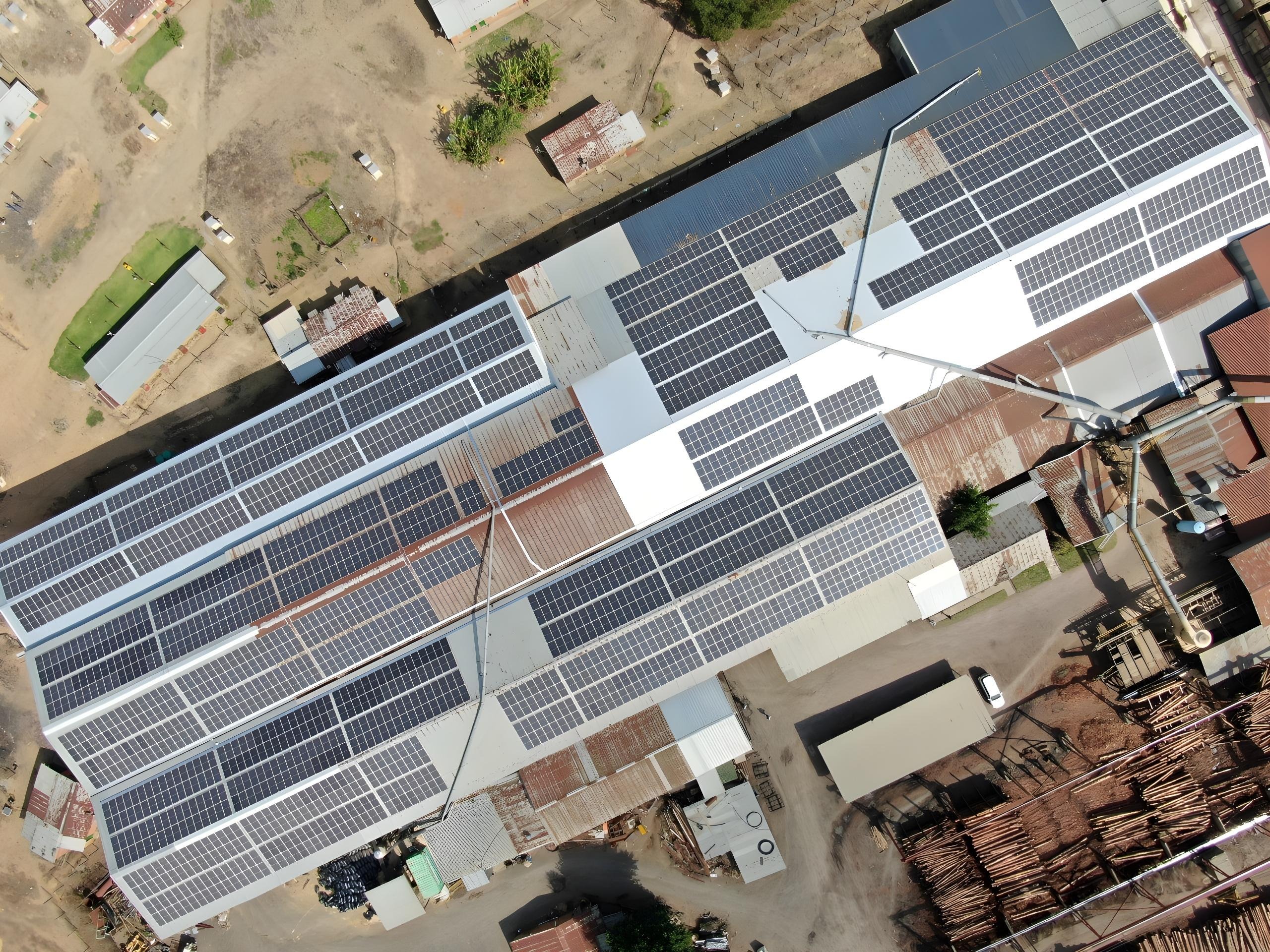
The performance of the first phase gave Bracken Timbers the confidence to go further.
Following its success, the company approved an additional 540 kWp expansion. Once complete, the expanded system is expected to increase annual electricity savings to approximately R1.1 million, while covering even more of the sawmill's daytime energy needs.
Every time the power went out, production slowed. Delivery schedules became harder to maintain, customer commitments came under pressure, and the disruption extended far beyond the factory floor - to suppliers, customers and the company's 1,500-strong workforce.
The team explored generating electricity using its own wood waste, including sawdust and bark. While it was technically possible, building, operating and maintaining an energy plant would require specialist expertise outside its core business.
Bracken Timbers knew what it needed: a reliable energy solution and an experienced partner to make it happen.
The solution
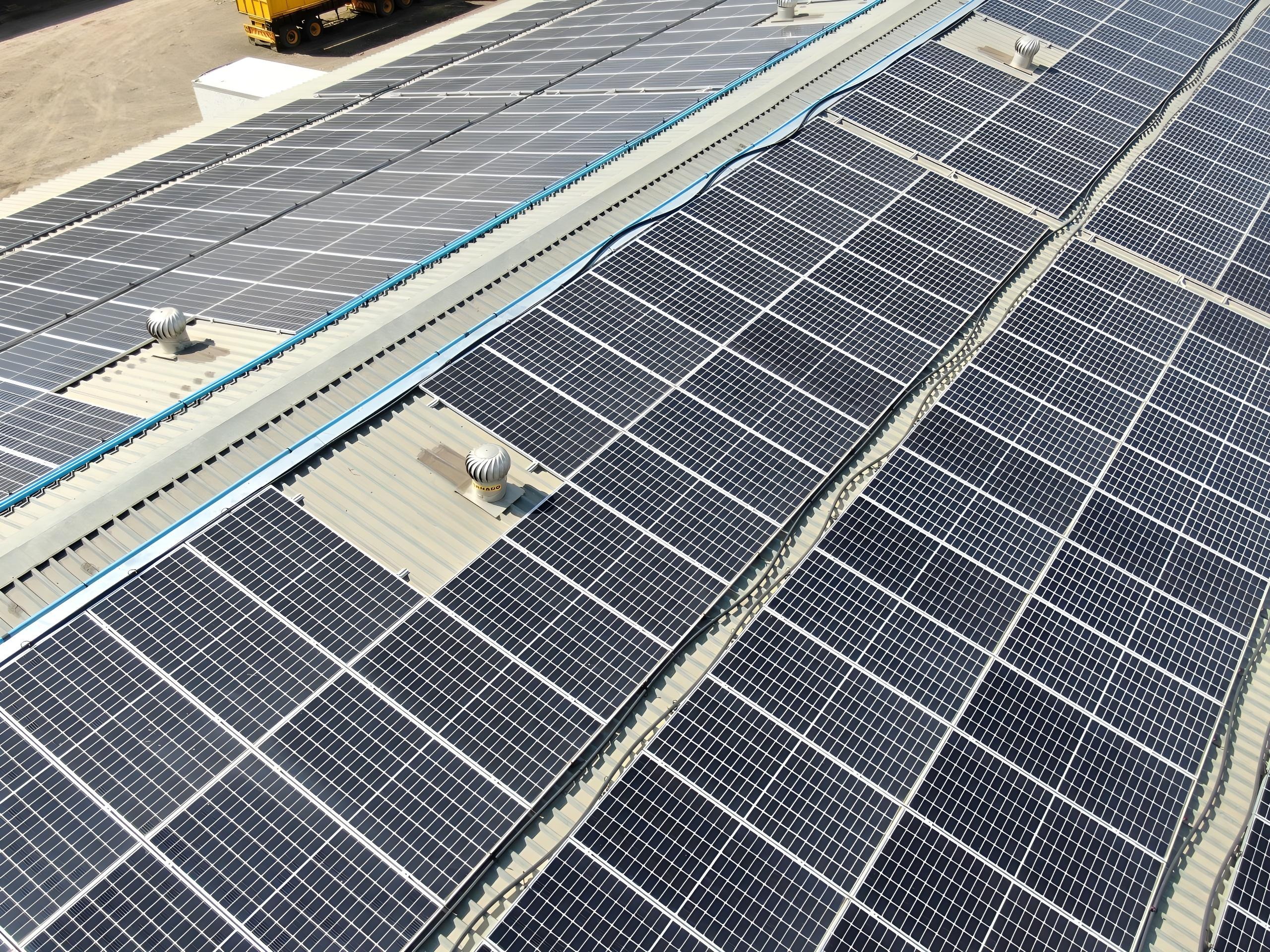
Candi Solar designed and financed a 1.5 MWp solar installation through its Performance-Linked Instalment Sale (PLIS) model.
In simple terms, Bracken Timbers did not need to make a heavy upfront investment or take on the operational risk of managing a solar plant.
Instead, the business pays for the energy the system generates, while Candi takes responsibility for its performance, maintenance and long-term optimisation.
That means the Bracken Timbers team can remain focused on what it does best: producing quality structural timber - while its solar system gets on with producing reliable, more affordable energy.
The impact
Production Keeps Moving
The solar system was integrated with Bracken Timbers' existing backup generators, helping the sawmill continue operating for full nine-hour shifts during load shedding.
So, while grid interruptions continue to bring production to a halt for many manufacturers, Bracken Timbers can keep its mill running, stay on schedule and continue fulfilling customer orders.
Most importantly, this increased energy stability helps protect consistent employment for more than 1,500 people.
“
The partnership has delivered exactly what was promised. As the solar system operates over time, the financial and operational benefits will only continue to grow.
George Johnson,
Director, Sawmill & Charcoal,
Bracken Timbers
Thinking about solar for your business?
Get a free, tailored assessment of what solar could save you — with zero upfront cost and performance risk carried by us.
Book a free consultation
.jpg)
.jpg)